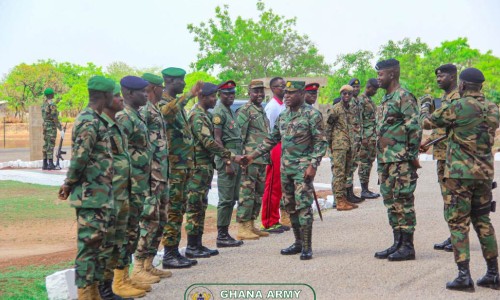

The Deputy Commander of the Army Training Command (ATRAC), Colonel Ibrahim Abubakari Salifu-Wumbei, has officially closed the United Nations Engagement Platoon Training at the Army Peace Operations Training School, Bundase, on Friday 13 March 2026.

The ceremony marked the end of a two-week intensive programme aimed at equipping personnel with the knowledge and practical skills required for modern peacekeeping engagement operations.Colonel IA Salifu-Wumbei, who was the Guest of Honour, commended participants for their dedication throughout the course.

He noted that the training moved beyond theoretical instruction to include practical exercises and simulations designed to prepare troops for the complexities of United Nations peacekeeping missions. According to him, the course helped bridge the gap between classroom concepts and real operational scenarios.

Colonel Salifu-Wumbei further emphasised the importance of engaging women and integrating gender perspectives in conflict environments to achieve sustainable peace. He added that the training also strengthened participants' understanding of international humanitarian law, human rights law and the protection of refugees within peacekeeping settings.

The Lead Facilitator of the Training from the Canadian Armed Forces (CAF), Contingent Task Force Commander, Lieutenant Colonel Marc Gallant, described the participants as professional soldiers committed to serving a cause greater than themselves. He noted that peacekeeping missions demand resilience, compassion and professionalism.
Additionally, he noted that the collaboration between Canada and Ghana reflects both countries' shared commitment to global peace and security.

Speaking on behalf of the participants, the Engagement Team Platoon Commander, Lieutenant Mariam Atigbire, expressed appreciation to the organisers and facilitators for the valuable training received. She stated that the course had enhanced their understanding of cross-cultural communication, conflict-related sexual violence, and protection of civilians and children in armed conflict.

Present at the ceremony included the Commander of the Army Peace Operations Training School, Col Reuben Dela Klutse, Commanding Officer UNISFA GHANBATT 5, Lt Col Prince Nadom, Officer Commanding ESSMGB, Lt Col Benjamin Danful and other senior officers.
GASAE Commissions New Student Trainee Dormitory
30, Apr 2026
UNMISS GHANBATT 13 Embarks on Religious Outreach
27, Apr 2026
The Ghana Army, is Ghana’s Land Warfare Component tracing its origins from the Gold Coast Constabulary Regiment (GCCR) in the then British Empire, evolving through the years to become the present-day Professional Ghana Army.
Copyright 2026 Ghana Army - All Rights Reserved